FixAnything: 3D-Consistent Rendering Refinement via Video Generative Priors

Carnegie Mellon University
(* denotes equal contribution / advising)
European Conference on Computer Vision (ECCV) 2026
TL;DR A single generalist video model that repairs rendering artifacts from any 3D representation — 3DGS, NeRF, mesh, or sparse point clouds — by repurposing a pretrained video diffusion model with minimal modification and finetuning.

(Degraded) render is camera control

Every representation has its own artifacts — yet the render still preserves the camera trajectory and coarse scene layout, providing the control signal.

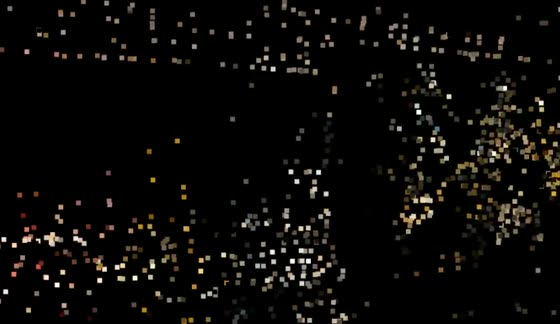
A (very sparse) point cloud is enough

Even a very sparse point cloud (e.g., from COLMAP) gives the video model effective camera control, with only minimal LoRA finetuning on ~ 20 paired videos.

Pose accuracy as the reward for DPO

Camera poses recovered by COLMAP from each output serve as the reward; Flow-DPO then steers the model toward geometrically consistent outputs.

Switch representation below, or use Slider to drag a seam between the input render and the repaired output — same frame, same camera trajectory.

Representation
Sparse-point input
FixAnything Output
0.0 / 0.0s
Sparse-point input video, unrolled
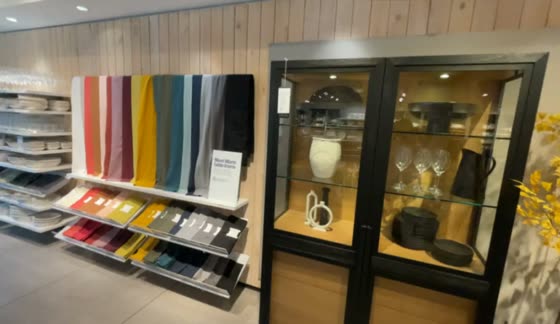
First frame: a clean view
Frame 1 · clean view
· · ·
Middle frame: the degraded render
Frame 40 · point-cloud render
· · ·
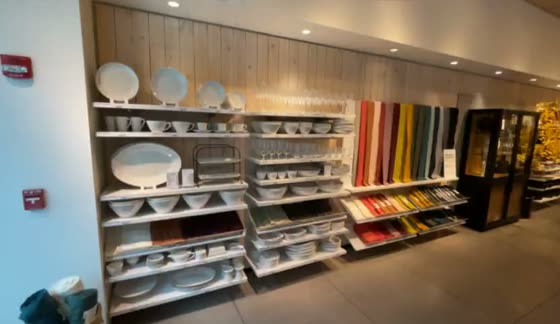
Last frame: a clean view
Frame 65 · clean view

Clean training views the trajectory passes through — the model treats these as anchors and propagates appearance, lighting and scene structure into the degraded frames in between.

01. Method

Rendering from 3DGS, NeRF, meshes or point clouds produces artifacts whenever input views are sparse or the target view lies far from them. FixAnything poses the fix as video-to-video translation and adapts a pretrained video diffusion model (Wan2.1-I2V-14B) in two stages:

Stage I — Supervised finetuning

  • Conditioning — the degraded render's VAE latent is channel-concatenated with the noisy latent, together with a per-frame binary mask marking which frames to trust and which to fix.
  • Data — paired videos from DL3DV-10K, rendered from all four representations and trained jointly as one model.
  • Training — a rank-64 LoRA adapter (< 1% of parameters), 3000 iterations on a single H100; as few as 20 paired videos suffice.

Stage II — Geometry-aware preference optimization

  • Motivation — the model sometimes hallucinates structures that look plausible per frame but are inconsistent across views.
  • Reward — how accurately COLMAP recovers the output video's camera poses (AUC@5° against the input poses).
  • Flow-DPO — several rollouts are sampled per scene, ranked by this reward, and paired higher-against-lower (AUC gap ≥ 0.2); Flow-DPO then finetunes the LoRA on these pairs, improving pose accuracy from 61.1 to 68.3 AUC@5° with no additional inference cost.
02. Ablations

Geometry-aware preference optimization

Without DPO, some seeds hallucinate structure that shifts from frame to frame and breaks 3D consistency. Ranking rollouts by recovered camera-pose accuracy steers generation toward geometrically faithful outputs.

Input
Ground truth
Before DPO (hallucinated tree-like structure breaks geometric consistency)
After DPO
0.0 / 0.0s

Mask-aware conditioning

Without the mask, the model cannot tell clean frames from mildly degraded ones and hallucinates over the training views. With it, those frames are preserved and serve as anchors for the frames around them.

Input
Ground truth
Without mask (note the missing wet-floor sign, which also corrupts nearby frames)
With mask
0.0 / 0.0s
03. Results

DL3DV

Scene
Representation
3DGS input
FixAnything Output
0.0 / 0.0s

DL3DV-Drone

Additional aerial DL3DV scenes with long trajectories. Trajectories longer than 61 frames are processed in overlapping chunks that share a clean anchor at each boundary.

Scene
Representation
3DGS input
FixAnything Output
0.0 / 0.0s
clean anchor viewclean anchor viewclean anchor view clean anchor viewclean anchor viewclean anchor view

Clean training views the trajectory passes through. The model treats these as anchors and propagates appearance, lighting and scene structure into the degraded frames in between.

MipNeRF-360 (cross-dataset generalization)

Scene
3DGS input
FixAnything Output
0.0 / 0.0s

LLFF (cross-dataset generalization)

Scene
3DGS input
FixAnything Output
0.0 / 0.0s
04. Can we tell where the model is hallucinating?
Mesh input
FixAnything output (seed 1)
Ground truth
Error  |output − GT|
Uncertainty  std over 5 seedslowhigh
0.0 / 0.0s
05. BibTeX
@inproceedings{vuong2026fixanything,
  title     = {FixAnything: 3D-Consistent Rendering Refinement via Video Generative Priors},
  author    = {Vuong, Khiem and Ramanan, Deva and Narasimhan, Srinivasa},
  booktitle = {European Conference on Computer Vision},
  year      = {2026}
}

Acknowledgements: We thank Shubham Tulsiani, Nikhil Keetha, Sriram Narayanan, Anurag Ghosh, and other members of Deva's and Srinivas' groups at CMU for their valuable feedback and suggestions at various stages of this project. This work used Bridges-2 at Pittsburgh Supercomputing Center through allocation cis240119p from the Advanced Cyberinfrastructure Coordination Ecosystem: Services & Support (ACCESS) program, which is supported by National Science Foundation grants #2138259, #2138286, #2138307, #2137603, and #2138296. This work was supported by Intelligence Advanced Research Projects Activity (IARPA) via Department of the Interior/Interior Business Center (DOI/IBC) contract number 140D0423C0074. The U.S. Government is authorized to reproduce and distribute reprints for Governmental purposes notwithstanding any copyright annotation thereon. Disclaimer: The views and conclusions contained herein are those of the authors and should not be interpreted as necessarily representing the official policies or endorsements, either expressed or implied, of IARPA, DOI/IBC, or the U.S. Government.